
Building a product that requires constant LLM calls gets real expensive, real fast. Fortunately, decision models like Jev can do some of the work up to 444.6x cheaper and 193.6x faster. Here's how we use them at PostHog:
4115191146
本串介绍PostHog如何用决策模型替代部分LLM调用,以降低成本并提升速度,并说明哪些任务仍应使用LLM。

Building a product that requires constant LLM calls gets real expensive, real fast. Fortunately, decision models like Jev can do some of the work up to 444.6x cheaper and 193.6x faster. Here's how we use them at PostHog:
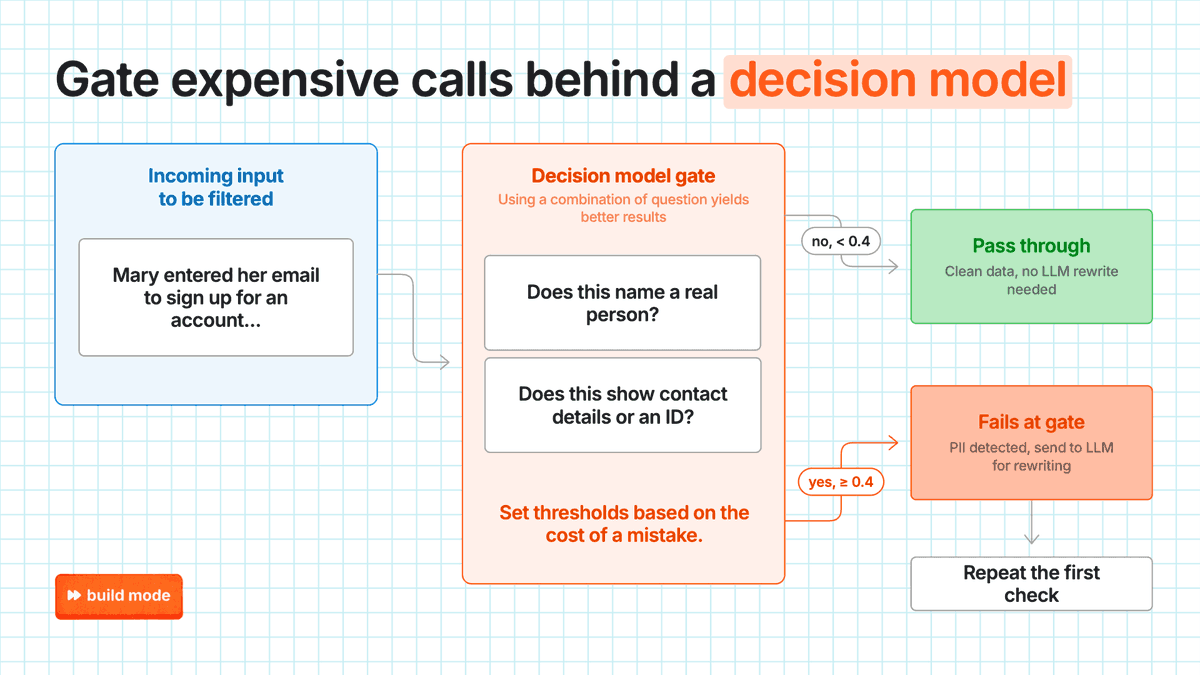
It would cost way too much to send every Replay Vision summary to an LLM to scrub personal data. Instead, we get a decision model to score session summaries, and only the ones that score below 0.4 for PII get rewritten by Gemini.
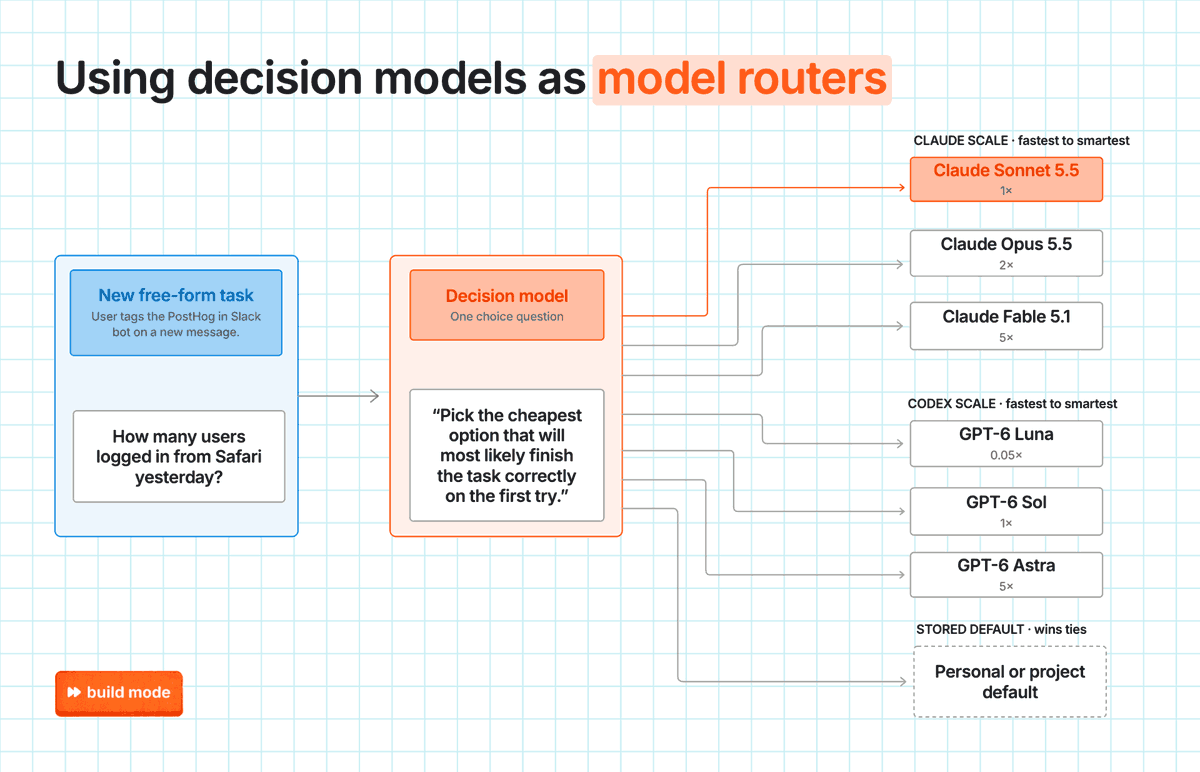
Our PostHog Slack bot uses one to determine which model it should use to complete a task. When it receives a message, it checks a list of models to decide which one makes the most sense. Each option in the list carries a short note from us on what that model's good for, like "A general coding model. Good for most code changes and debugging" for GPT Sol.
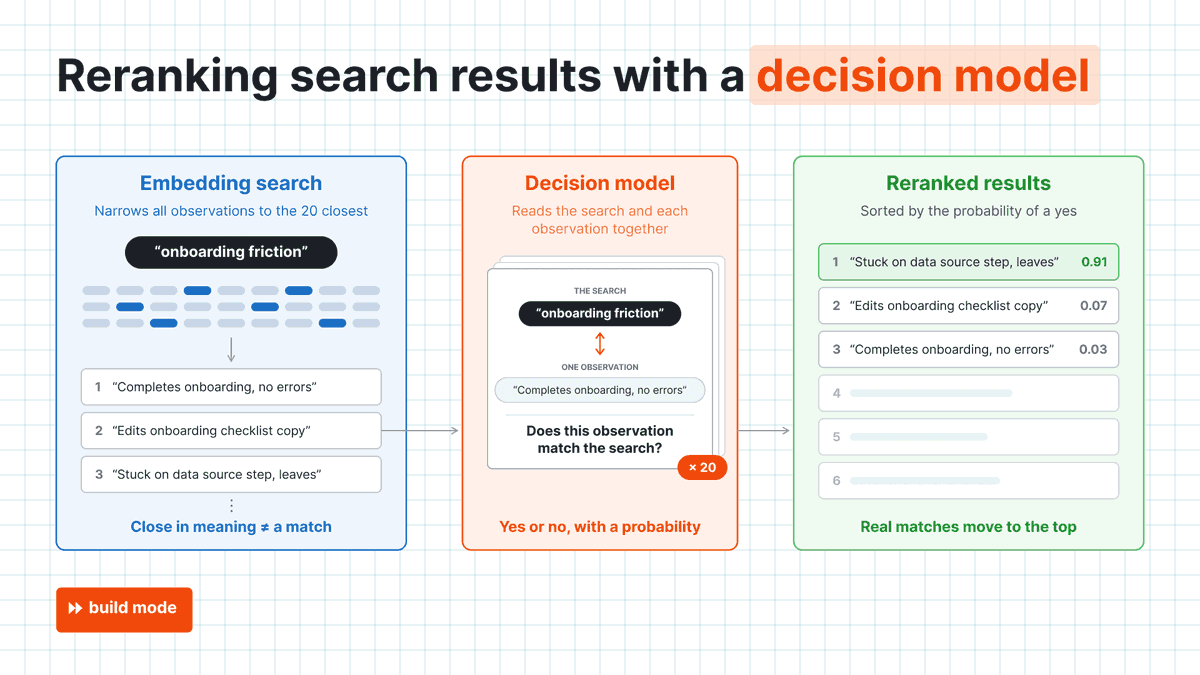
Decision models can also be used in combination with embeddings to more cheaply rank results than an LLM would. When a user searches for a theme like "onboarding friction" in Replay Vision, an embedding search pulls an initial list of session replays. It then passes that list to a decision model, which checks if the observation matches the initial search, then reranks them by probability. This improved ranking quality by about 25%.
Decision models aren't so good for multi-step thinking, though. Before we landed on embeddings, we tried using them to evaluate two questions about each Session Replay: 1. Is this session worth watching? 2. If so, why is it worth watching? (Choices like “error on screen,” “slow or stuck,” “user gave up", etc.) The results were awful. Processing the two questions required an hourly job that sent 12-38k tokens each and flooded the model server and block other products' calls for hours. It's better to stick to LLMs for that kind of work.
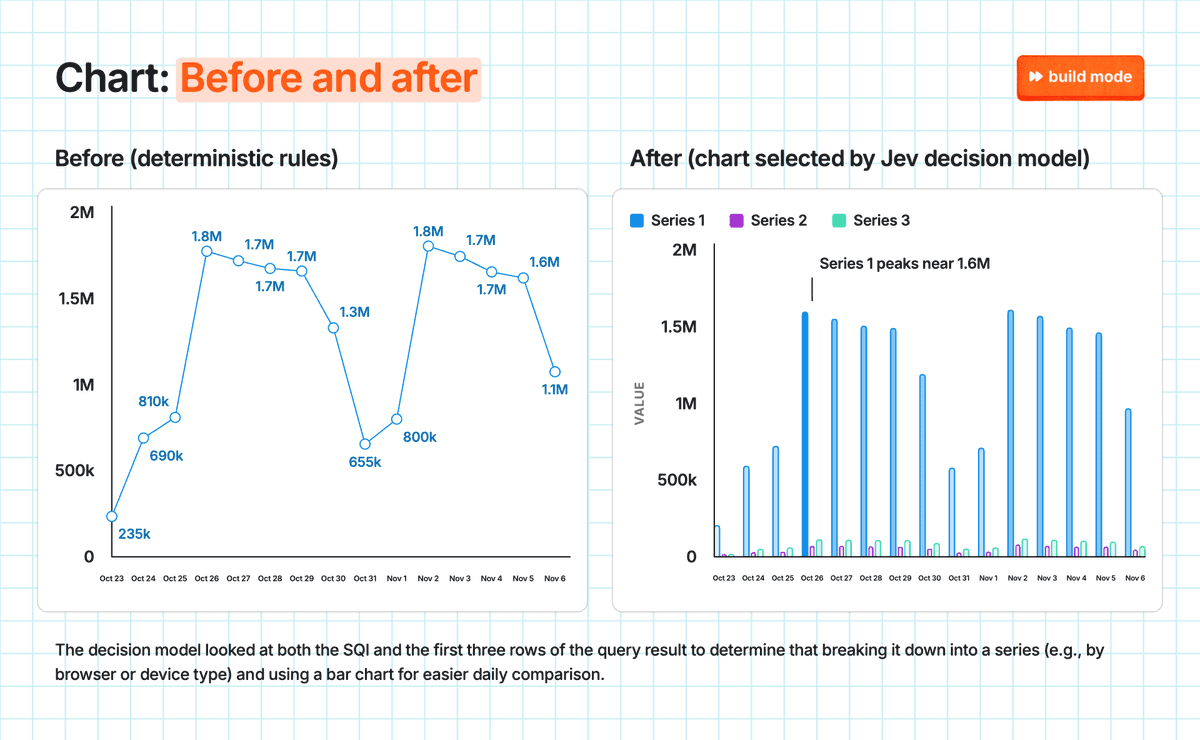
We also enhanced our deterministic SQL query chart picker in PostHog. It used to only look at rules (ex: multiple rows, a number column and a date column meant a line chart). Now, for opted-in orgs, a decision model looks at the SQL itself and first three rows of results to determine the best visualization for the data.
For open-ended jobs, LLMs should still be the default. New solutions for the middle-ground are well underway already, though. Our in-house AI research team built Jeeves for jobs that require more context than typical Jev use cases, but still need to be answered cheaply. It's a hybrid decision model that reasons before deciding when it's unsure. It's our default for decision calls at PostHog that don't name a model.
For the full context on all of these examples, you can read Jina's blog.
PostHog@posthog · 2026-11-09This is everything we've learned about using decision models so far: when to use them, how to use them, and mistakes to avoid.
阅读 X 文章 ↗只统计本站收录的帖子,按点赞排序。

现在,我最喜欢的软件公司中有 50% 在使用 jev(🫶 @posthog)

jev - 445x cheaper and 200x faster

Não tem como, antes a maioria dos pipes agenticos usavam uma llm como classificador. O ganho que qualquer "classificador-as-a-service" - seja o jev ou qualquer outro - traz é absurdo. Se você ainda não tá usando, tá deixando dinheiro na mesa

If you have an ai workflow, just ask your coding agent to go through your code and see which LLM calls can be replaced with decision model calls like jev

如果你的智能体能替你监控每一个借势 GTA 6 的品牌会怎样…… 推出面向智能体的 Social API,由 Jev @typesafeai 提供支持。 一个密钥,任意社交数据。 - TikTok、Instagram、Reddit、YouTube、LinkedIn、广告库,

对话式语音AI的第一批真正大规模应用,主要集中在简单的面向客户的交互上:客户支持、日程安排,以及半脚本化的外呼,比如提醒人们预约时间或筛选销售线索。 现在已经出现了很多有趣的新作品,它们正在探索更复杂的用例和架构。 语音体验必须做到:1)快速、灵敏、自然;2)在长时间、多轮的

《GTA 6》今天上午发售了。 我在游戏里的海滩上待了两个小时。 我的机器人在我屏幕的另一半一直在交易。 5 SOL → 29.97 SOL。 我的 Mac 上运行的内容 → 左边:GTA 6 → 右边:Grok Bot × Jev,监控每一枚新的 GTA 6 代币, 我
Jev Score · 概率换算为 100 人举手
| 评分 | 虚拟举手 | 小计 |
|---|---|---|
| 100 分值得收藏 | 4 人 | 400 |
| 75 分具体信息 | 30 人 | 2,250 |
| 50 分有据观点 | 39 人 | 1,950 |
| 25 分情绪表达 | 26 人 | 650 |
| 0 分噪音 | 1 人 | 0 |
筛选门槛 20% · 不计入质量分