
expemilly
@expemillyweb3 · 673
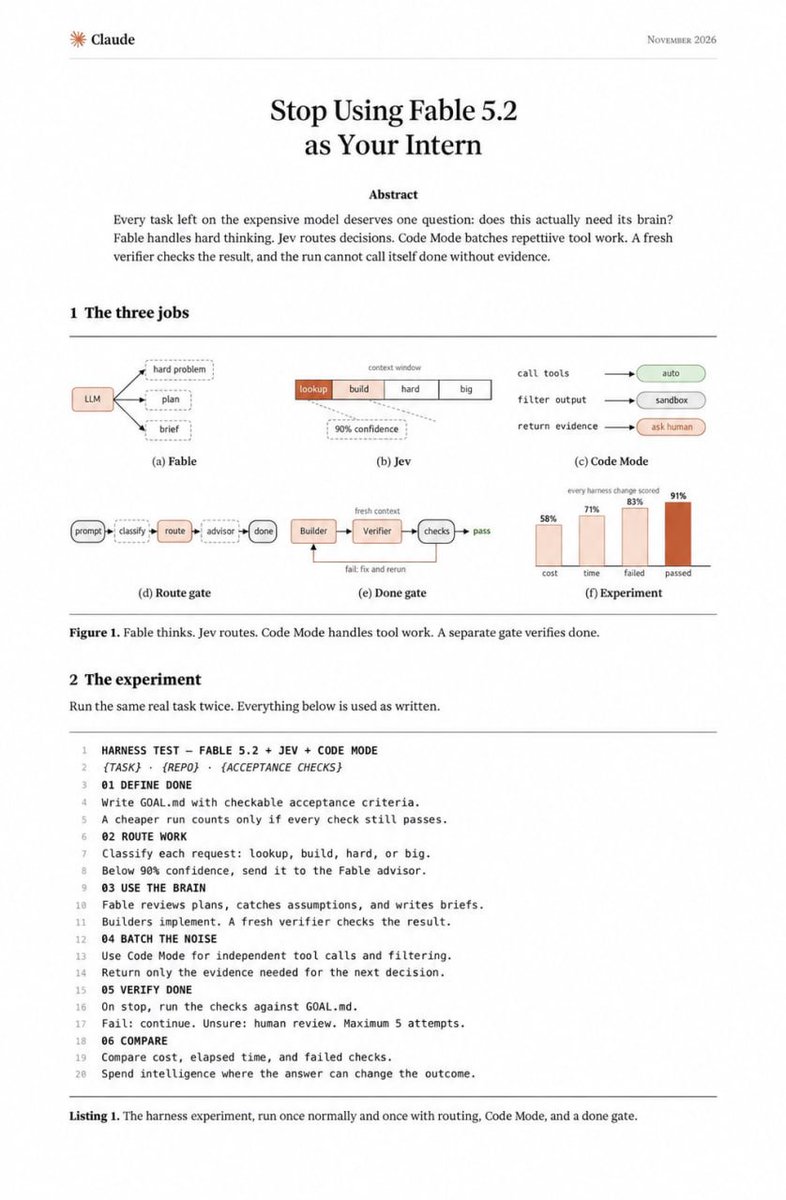
STOP USING FABLE 5.2 AS YOUR F\*CKING INTERN. 1.01 MILLION → 307,860 tokens. Same Fable 5.2. Same task: total up 120 records fetched through a tool. A published Code Mode benchmark reported 71% fewer tokens processed. The model stayed the same. The plumbing changed. That’s why Fable 5.2 + Jev + new Code Mode is the stack I’d put together: → Fable gets the hard problems. → Jev gets the routing decisions. → Code gets the repetitive work. Here’s where it gets interesting: 1 / STOP MAKING THE BRAIN READ EVERY RECEIPT Code Mode lets Claude write JavaScript that calls its tools and processes the results. Fetch the records. Filter them. Calculate the answer. Return what the model needs for its next decision. Those intermediate results can stay inside the script. 2 / MAKE TASKS EARN THEIR WAY TO FABLE The fable-harness repo gives Fable the advisor and orchestrator seats. Builders implement. A fresh verifier checks their work. Jev routes the incoming task. Below 90% confidence? Escalate to the advisor. You’ve given uncertainty an address. 3 / GIVE THE SMALL MODEL THE RIGHT TO REJECT “DONE” When Claude tries to stop, the harness runs your checks. Jev judges whether the evidence satisfies GOAL.md. If it doesn’t, the run goes back to work. 5 attempts maximum. Uncertainty goes to human review. A model that doesn’t write the code can challenge the system that does. That’s the part to steal. Define what passes. Assign who builds. Separate who checks. Decide what deserves escalation. The benchmark figures above cover 2 runs per mode on one aggregation task; token reduction doesn’t translate directly into the same bill reduction. But the design opportunity is clear: make every task earn a call to the expensive brain:
 Trackmind@0xTrackmind · 2026-10-23
Unlock Opus 5.5: The Harness Guide for Agents That Actually Ship
 阅读 X 文章 ↗
互动数据为采集时快照


